Confessions of an Amateur Writer, Part I

Five years ago this week, I checked into Buffalo Bill’s Hotel and Casino on the border of California and Nevada.

buffalo-bills-casino (1)

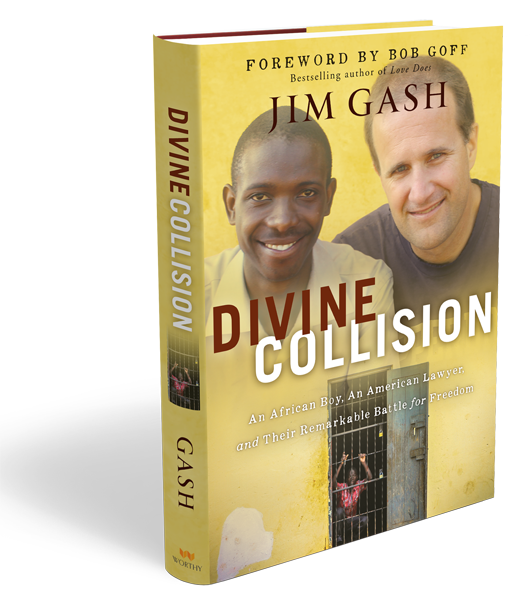
I was going to write a book – or at least a big chunk of one.  Two months earlier, my life had changed during a January, 2010 two-week visit to Uganda – my first foray into anything that could be remotely called a “Mission Trip” in my first forty-two years of life.

While in Uganda, I spent a week working in a juvenile prison in Masindi with four other American lawyers and an American non-profit worker.  What happened that week was later dubbed “The Masindi Project.”

It was, perhaps, more appropriately referred to by my oldest daughter Jessica as “Dad’s mid-life crisis.”  While there, I struck up a highly unlikely friendship with a sixteen-year-old Ugandan prisoner named Henry and we became lifelong friends.

Jim, Henry, and Joseph on Henry's Mat

During these two weeks, I sent daily e-mail updates to family and friends about what we were experiencing.  I found the process of capturing feelings and experiences and distilling them into written form to be equal parts challenging and gratifying.  After we returned home, I talked to Henry every few days as the juvenile cases we prepared for trial were taken to court.  Kids were being released almost daily, so I continued sending regular e-mail updates to the growing list of those eager to hear what was happening. Some of the recipients encouraged me to write a book about my experiences.  I laughed.

Soon thereafter, I read Donald Miller’s book, A Million Miles in a Thousand Years.

A million miles

In Chapter One, Don writes about Bob Goff: “I have this friend Bob who writes down everything he remembers . . . He’s the only guy I know who remembers his life.  He said he captures memories, because if he forgets them, it’s as though they didn’t happen; it’s as though he hadn’t lived the parts he doesn’t remember.”

After reading that, I had a strong conviction that I didn’t want to forget the memories I made in Uganda – I lived those moments (deeply and intensely) and I didn’t want them to disappear.  That’s how I found myself (taking the advice of some friends and family) as an amateur writer locked in a cheap hotel with my laptop, an ice chest full of diet coke, and a card table I brought with me (it is a really cheap hotel).  I wanted to make sure I never forgot what happened in Uganda.

That’s when I learned a lesson that real writers already know – the first page is the hardest to write.  Where does the story begin?  Using my mammoth reasoning skills, I concluded it should start at the beginning.  But where did this story begin?  Was it when we arrived in Uganda?  Was it when we decided to go?  Or did it begin before we decided to go – at all the times I had previously decided not to go anywhere outside my comfort zone?  I knew that Henry’s story was entwined with mine, so was the beginning when he was arrested?  But the story of how and why he was arrested itself started sooner – much sooner.

From reading Don Miller’s book, I knew the story needed to have an arc – an inciting incident resulting in crisis with rising and falling action, ultimately culminating in a resolution where the main characters experience change.

story-arc

So I mapped things out along these lines.  Henry’s inciting incident would be his wrongful arrest, which led to his harrowing two years of imprisonment, culminating in his release from prison with the assistance of our team.  My inciting incident was Bob Goff’s conference speech entitled “Love Does” (later a best-selling book) that caused me to cede a bit of control of my life and go on this one-time trip where I met and helped Henry and some other juvenile prisoners get home to their families, and in the process grew spiritually.

If I could only get started, I reasoned, then I could pound this puppy out over the course of a few months, at most.  I was accustomed to writing lengthy and complex legal briefs and law review articles, so I should be able to do this.

Foolishness.  Utter foolishness.  Though I was entirely oblivious to this at the time.

As I often did with legal writing, I decided not to get bogged down at the beginning – I just started writing about what happened – I would organize these into chapters later.

Over the course of those three days, I got about fifty pages written – less than I hoped, but about what I realistically expected.  I would finish the spring semester of teaching two months later, then spent June finishing the book.  I was pleased with my plans.

But by April, my plans were obliterated.  My neat little story arc for Henry shattered.  While he was acquitted in the original murder charge that landed him in juvenile prison, he was convicted on a second charge associated with the tragic death of another prisoner who died shortly after a failed escape attempt.  Henry wasn’t going home.  Instead, he was very likely facing an extended prison sentence.  And my story arc collapsed just as hard – I found myself back on a plane headed for Uganda to be with Henry and questioning where God was in all of this.  So much for neat and tidy.

Fortunately, things got back on track again in May.  After lots of prayer and legal wrangling, Henry was released on probation and resumed school.  So I resumed writing.

I also began researching how the book publishing process worked.  I bought a book off Amazon and started reading.

Essential Guide

I learned that the first step in getting a book deal was securing an agent.  Makes sense.  And the way to get an agent, I learned, was through what’s called a “query letter.”  This one-page letter describes the book, the audience, the author, and the author’s platform.  But I didn’t just want an agent.  I wanted a specific agent, and none other would do.

From the beginning, I had my eye set on the Yates & Yates literary agency.  Sealy Yates and his two sons Curtis and Matt are all Pepperdine Law grads, and Sealy was on Pepperdine’s Board of Visitors.  I knew they represented lots of high profile writers and that they were stellar at what they did.  Serendipitously, I found out that Sealy and Matt would also be attending the inauguration of Ken Starr as Baylor’s President in September of 2010, so I decided to skip the query letter phase and directly approach them about representing me.  By that time, I had finished the first seven of what I believed would be fifteen chapters.

During a pre-inauguration lunch with a bunch of Pepperdine folks, I sat next to Matt and slyly broached the subject.  He was kind and agreed to take a look at what I had, but was also honest with me about the fact that Yates & Yates worked almost exclusively with “established” authors.  The subtext should have been clear — amateurs need not apply.  Later that day, I handed him the first seven chapters.

Looking back now, I cringe at my audacity and laugh when I think about what was going through his head.

As expected, this plan crashed and burned.  I’ve been too embarrassed to ask Matt if he ever read what I gave him, but I sincerely hope he placed it on the six-story-high pile of unsolicited manuscripts from wannabe writers he gets each year.

Mercifully, Matt didn’t follow up with a rejection letter.  If he had, I probably would have quit right then.

In my next post, I will discuss how and where I learned just how little I knew about storytelling and where I found some very helpful answers.

The Ebola Formula

Perhaps the study of law has something to add to the study of medicine, at least in one context.  A few weeks ago, I was talking with my brother and sister-in-law about their decision to invest a sizable chunk o’ change on their boys learning to “swim” when they were about eight months old.  These lessons are designed to ensure that if the boy falls into a pool, even fully clothed, he can quickly roll onto his back and float and cry until rescued.  The iterative training takes place over a several-week period and scares the hell out of the kid at the beginning. It is done under very strict conditions and almost always results in the kid learning how to stay alive for several critical minutes should the unthinkable happen.

So my sister-in-law is telling me about a conversation she had with one of her friends who criticized her for putting her sons through this training because of the “trauma” and the little bit of water the kids occasionally ingest during the training that some sometimes hurts their “wittle tummies.”  Her friend vowed never to subject her children to such cruelty.

“The BPL on that one is easy,” I said.  “No question that you were right and your friend was wrong.”

“BPL?” she quite reasonably asked.

“Why yes, BPL,” I responded.  “It is life’s most important formula.  It works for swimming training just as well as it works for Ebola.”  Knowing I was being coy – I like to yank her chain from time to time – I finally explained:

This is a simple formula I teach my students in Torts as they learn to analyze whether an individual acted negligently in any given situation.  P equals the probability of harm and L equals the gravity of harm risked by the conduct in question. (No one really knows why L was chosen instead of G for this formula – probably something to do with Latin).  When multiplied together, they give you the magnitude of risk posed by a given activity.  B equals the burden of avoiding the risk.  If B is less than P multiplied by L (B<PL), then the rational (reasonable) decision is to engage in the activity.

To illustrate, look at the choice faced in deciding whether to get the swimming lessons.  The first task is to define the activity to be evaluated – Should the parents give their kids these swimming lessons?  Set P as the probability of the kid falling into a body of water when momentarily unsupervised, and L as the gravity of harm if this happens.  The probability of the kid falling into water is pretty low – say 1/100 of 1%.  But the gravity of harm that would be suffered is quite high – death or serious injury.  So while the probability of harm is low, the gravity is astronomical.  The burden to be evaluated is the activity necessary to avoid the risk — the fleeting fear and tummy trouble junior suffers, plus the cost (financial, emotional, and inconvenience) associated with the lessons.

When measured against the relatively minor burden of putting junior through the lessons and paying the cost, the results should be clear for most people: B<PL.  In other words, the magnitude of the risk outweighs the burden associated with avoiding it.  Accordingly, the rational decision would be to give the kid the lessons.

Whether we acknowledge it or not, we make BPL decisions during most moments we are awake.  We are constantly weighing costs and benefits in what we eat, what we buy, what time we go to bed, etc.

The recent measles outbreak has sparked a debate that will only increase in volume and intensity over the next few years as such outbreaks increase in size and scope. Why?  Because too many parents reached different BPL decisions than others.  The way to keep diseases such as measles at bay is to inoculate the entire herd – that way no one gets it or spreads it.  But several years ago, many parents looked around and decided that since all the other kids in the herd were getting inoculated, then they didn’t need to inoculate their kids.  After all, if the other kids in the herd don’t catch measles because they are inoculated, then their kids can’t catch it even though they aren’t inoculated because the disease isn’t in the herd.

Here is the BPL equation by the parents.  First, identify the question being evaluated – Should I get junior vaccinated against the measles?  The probability of getting measles is really low because the entire herd is getting inoculated (and has been for years) so there will be no one to infect their kids with measles.  And while the gravity of harm associated with measles is potentially somewhat severe, it isn’t life-threating for most of those infected.  Thus, the magnitude of risk associated with contracting measles (probability multiplied by gravity) is relatively low, or so the parents believed.  On the other side of the equation is the burden encountered to avoid the risk – getting the inoculation.  Most parents considered this to be very low – getting junior jabbed with a needle just after his first birthday is little more than an afterthought.  The kid cries for thirty seconds, but the kid cries every hour or two anyway – no big deal.  So most parents had their kids vaccinated because the minor burden is less than the moderate risk – B<PL.

But we are now finding out that the “sophisticated” parents (usually wealthy & highly educated) saw the equation a bit differently.  Like most parents, they concluded that since the other parents were vaccinating their kids, the probability of junior getting measles was very low because there would be no other kids with measles to spread the disease.  Thus, they reasoned, the magnitude of risk (PL) approached zero.  But, and this is critical, these parents read or heard about a study that suggested autism and other similar conditions might be traced to these vaccinations, so the burden of avoiding the risk (B) was actually higher than the momentary hissy fit junior would pitch after getting jabbed.  So much higher, they reasoned, that now the burden outweighed the risk (B>PL), so they found it rational not to inoculate junior.  (Incidentally, the study these parents relied upon was quite heavily criticized and controverted when it was issued, and later thoroughly discredited, withdrawn, and labeled as “an elaborate fraud”).

As a direct consequence, we get a measles outbreak, at the happiest place on earth (Disneyland), no less.  Why?  Because the parents many call “savvy” or “clever” (others call “selfish”) were larger in number than the “savvy” parents supposed when they made the decision – it turns out quite a few other members of the herd weren’t inoculated either.  So when one of them contracted measles, it spread quickly throughout the herd.  In fact, the vaccination rate in some wealthy areas of Southern California is now as low as impoverished and war-torn South Sudan.  I suspect this will change, however, in the wake of this outbreak because most people act rationally, and when armed with the actual (rather than supposed) information that informs a BPL analysis, they will make more rational choices.

This highlights an important point – a correct BPL analysis requires accurate data points.  It is simply an empirical question.  Which brings me to Ebola.

The same formula must be applied to the ongoing, though thankfully diminishing, discussion about how to handle people coming from locations where they were potentially exposed to Ebola.  It was as disappointing as it was unsurprising that the majority of Republican politicians accused the Obama Administration of playing politics with Ebola, while the majority of Democrat politicians were accusing Republicans of doing the same thing.  One side argued that anyone coming from an infected region should be quarantined for twenty-one days, while the other argued that doing so amounted to unnecessary scare tactics and would hamper the work on the ground in Africa because fewer people would be willing to go and help stop the spread of the disease at its source if they were thereafter quarantined.

So here is the question – Should we quarantine people, even if they don’t currently have a fever (and are thus potentially contagious), for twenty-one days after they return from an infected area?  At bottom, this isn’t a political question, but an empirical one.  The only rational approach to this conundrum is to apply the BPL formula.

Is the probability of harm (virus spreading in the United States) multiplied by the gravity of this harm (mass death and suffering) outweighed by the burden encountered by holding people in quarantine for twenty-one days?  In order to answer that question, one needs to assign values to the variables.  We can all agree that gravity of harm is quite high if Ebola were to break out in the United States.  Thus, L is HUGE.

The more important question is what is the probability of the virus spreading associated with allowing one who has come into contact with those infected by the virus, but isn’t currently running a fever, to roam freely in his or her community?  Relatedly, how big is the burden of confining those who have been exposed until we are confident that person isn’t a threat to the community?  This, of course, includes the financial and personal burdens placed upon those paying for the confinement and on those who have to be confined.  It also includes the deterrent effect that such confinement would have on medical professionals who might be willing to go to Sierra Leone, etc., for four to eight weeks if they could go straight home (assuming they had no fever), but wouldn’t go at all if they had to be confined for three weeks thereafter.

This question was brought into sharp relief when nurse Kaci Hickox resisted being quarantined after returning from West Africa.  She received roughly equal parts praise for asserting her “civil rights” and scorn for “selfishly putting others at potential risk.”  But who was right?

Once again, this should be an empirical and scientific question, and not a political one.  While I am not at all an expert on Ebola, I can read.  Experts tell us that for those infected, on average, there is a sudden onset of flu-like symptoms 12.7 days after exposure.  But it is also apparently true that for 4.1 percent of patients, their symptoms will emerge more than 21 days after exposure.  And according to the New England Journal of medicine, approximately 13 percent of those infected never ran a fever.  So how does this affect the application of the BPL formula?

As noted above, the gravity of harm is quite high if Ebola were to spread in the United States.  But what is the probability of it spreading if we don’t quarantine for 21 days those who come back from an infected region?  It is probably fairly low, but far from non-existent.  In order to virtually eliminate the risk, it appears that they would need to be quarantined for something like 30 days because 1 in 25 won’t show symptoms (and thus be presumptively contagious) until after the initial 21-day period.  Likewise, the solution can’t be simply to quarantine those running a fever because 1 in 8 apparently won’t even run a fever when they are contagious.

And how big is the burden that would be encountered by quarantining for 21 days (or 30) all who go to West Africa to assist in containing the outbreak?  The financial cost is not significant, at least when weighed against the risks.  But the deterrent effect is likely quite significant – convincing a doctor or nurse to spend a month or three in West Africa is pretty tough.  Adding another month in relative isolation after the return raises the burden even higher.

So what is the solution?  It is simple – put some really smart and informed (and apolitical) scientists/doctors/nurses in a room and have them apply the BPL formula.  Whatever they decide, we accept.

Just one guy’s opinion, but remember that all of life is a BPL.

At Long Last

I assume I’m not the only one who seemingly spends an inordinate amount of time waiting for some anticipated event to occur, results to come in, or project to be completed.  For those of us with close ties to Uganda, the wait often seems to be especially lengthy.  During my five-year love affair with this beautiful country and its beautiful people, God has taught me patience in countless ways, though the learning process isn’t nearly complete.

For several months in 2010, I waited for Henry to be released from juvenile prison.  And then for nearly three years, I waited for a hearing date in the court of appeals so I could argue why Henry’s conviction should be overturned.  On March 12, 2013, the day finally arrived for the argument.  As I discussed here, things went according to plan.

In 2014, my local counsel in Uganda filed two separate reminders with the court to encourage them to issue their ruling.  These were met with utter silence.  Then, earlier this week, on the exact date of the two-year anniversary of the hearing, I received . . . absolutely nothing.  Still no ruling and no indication of when it might be issued.

But, something else happened.  Something that is quite a bit more important for Uganda than the ruling in Henry’s case (which, as discussed below, will have no practical impact on Henry’s life).  Two years ago next week, the Chief Justice of the Uganda Supreme Court (Benjamin Odoki) reached the mandatory retirement age under Uganda’s constitution.  Eight months earlier, the same thing had happened to the Deputy Chief Justice (head of the court of appeals).  Rather than accepting the nomination of the body tasked with recommending to the President who Odoki’s successor should be, President Museveni, on the advice of his Attorney General, declined to appoint the Judicial Services Commission’s recommendation of Associate Supreme Court Justice Bart Katureebe as Chief Justice.  Instead, President Museveni gave retired Chief Justice Odoki a two-year contract to serve on the Supreme Court, which is permitted when there are vacancies, and then re-appointed Odoki as Chief Justice, arguing that the constitutional age limit didn’t apply since he was permissibly on the court on a contract basis.

Unsurprisingly, this provoked (i) howls from the Uganda Law Society (they actually disbarred the Attorney General in the wake of this action), and (ii) a lawsuit seeking to block the re-appointment.  Over a year later, the court of appeals ruled the re-appointment unconstitutional, sending us all back to square one.  In the interim, Justice Steven Kavuma – senior member of the court of appeals, who was also on the three-judge panel in Henry’s case – was named Acting Chief Justice and Acting Deputy Chief Justice.  But since he was only “acting,” rather than “substantive” head of the courts, he was not empowered to perform many of the duties of the Chief Justice.  So we have been in a two-year holding pattern.

At long last, however, President Museveni broke his silence last week and appointed Bart Katureebe to serve as Chief Justice – the same person nominated by the Judicial Services Commission two years ago.  (Justice Kavuma was also appointed to be Deputy Chief Justice).  These nominations still need to be approved by Parliament, but that is expected to happen soon.

In other updates on the Uganda front, Henry has completed his first semester of medical school.  In Uganda, as in the rest of the Commonwealth, medicine (like law) in an undergraduate major.  It will take Henry six years to complete his studies and become a doctor.  He first semester grades will be released next week.  Prayers are appreciated.

Pic 1

On the criminal justice reform front, things are progressing quite well under the leadership of several key Ugandan court and prosecutorial figures.  I am heading back to Uganda on April 15th for ten days for a series of meetings and events, and will also likely be back there in the middle of May when our students begin their summer internships.  Later in May, I will be hosting a group of Ugandan court and prison officials in both Louisiana and Malibu – more on that soon.  Then in June and July, I will be out there for our annual prison project and for what has been tentatively planned as a national plea bargaining conference.  (My youngest two kids – Joshua and Jennifer – will also be in Uganda this summer with a group from Oaks Christian High School, where they are a Junior and Freshman, respectively).

We are in a temporary pause on the completion of the documentary filmed this past summer as we search for funding to do some final filming.  We are thrilled with the rough cut and are eager to share it more broadly.  (I had a chance to show some clips of the film earlier this week during a talk I gave at Biola University at their annual Missions Conference).

I intend to provide updates much more regularly in the coming weeks and months.

Belichick’s Coaching Blunder Bigger than Carroll’s

Bill Belichick is the luckiest man in America this week.  While Pete Carroll is being pilloried in the press and at the water cooler following a questionable play call at the end of the game, it should have been Belichick whose coaching reputation took a throat punch on Sunday night.

But wait, you say: Everyone, and I mean everyone, contends that the worst coaching decision in Super Bowl (Football??) history was indisputably Pete Carroll’s decision to throw the ball on second and goal from the one-yard line with twenty-five seconds to go in a game his team was trailing 28-24, especially when he had one timeout and the beastly Marshawn Lynch in the backfield.  At first glance, this view seems rational.  This was likely the wrong call.  In fact, I will agree that it was probably a bad call, but not as bad as Belichick’s call forty seconds earlier.  Not nearly so.

Do I have your attention?

Rational football fans (and economists who aren’t football fans) can agree that whether or not a play call is a good one or a bad one must be judged from the standpoint of the decision maker at the time the decision was made – before the outcome of the call is known.  It is simply disingenuous to evaluate a call after considering what actually happened.  The only honest and fair analysis involves evaluating percentages.

Furthermore, the most accurate measure of just how bad a coaching decision was can best be determined by measuring the difference between the probability of success of the course taken and the probability of success of the course that would have maximized the probability of success.

So, for example, determining whether Carroll’s decision to run a passing play (rather than kicking a field goal) from the 10-yard line with 0:06 left on the clock at the end of the first half while trailing 14-7 was or was not a good call cannot take into account what actually happened.  On that play, a variety of outcomes could have occurred – incomplete pass in less than six seconds (leaving time for a field goal), incomplete pass that ran out the clock, a completed pass short of the goal line than ran out the clock, a sack that ran out the clock, an interception, etc.  I am fairly confident that Nate Silver would tell us that the rational (efficient) move in that situation would have been to kick a field goal.  Take the points and the momentum into halftime. But Carroll rolled the dice . . . and scored a touchdown.  It was a “gutsy” call, many would claim, and shows his coaching prowess.  But it was only a gutsy call because the 15-25% probability event occurred.  But that is simply not a rational way of evaluating the play call.

Likewise, had Russell Wilson completed the pass for a touchdown at the end of the game, Carroll’s call would have been labeled “inspired” because everyone on the field, in the stadium, and in the television audience knew the rational decision would be to give the ball to the Beast.  But the call that was made, even had it resulted in a touchdown, would have been the same call.  Again, we need to judge the wisdom of the call by evaluating the relative percentages of the possible outcomes.

Let’s break it down.  Here is what we knew the moment Marshawn Lynch’s knee hit the ground with 1:02 left in the game after being tackled at the one-yard line after a four-yard gain on first down:

Seattle had one time out left and the clock was running;

Marshawn Lynch is in the backfield, and he had gained four yards in the prior carry;

Russell Wilson is a smart quarterback (who won last year’s Super Bowl) and isn’t prone to boneheaded mistakes; and

New England is expecting a run.

But here are two other things Carroll knew, at least generally understood:

Marshawn Lynch had carried the ball five times from the one-yard line this season and had scored only once.

Over 100 passes had been thrown in the NFL from the one-yard line this season, and none had been intercepted.

Simplifying things just a bit (by removing a run/pass option that could have been called for Wilson), Seattle had two arguably rational courses of conduct at this point.  First, it could hand the ball to Lynch on second down (by this point, there were 25 seconds to go – no shame in huddling up here, especially since the clock was running).  If he scored, great.  If he didn’t, Seattle could either call a time out or spike the ball.  If they spiked the ball, they would get only one more play because the next play would be fourth down.  If they called a timeout, they would have 20 seconds left and it would be third down, but they would have no timeouts left.  At that point, they could either pass twice, pass once then run once, or run once.  It is unlikely they would have had time to run twice more if Lynch was stopped the first time on third down.  So if they ran on second down from the one, they would very likely get either two running plays, or one running play and two passing plays.  It is highly improbable that they would get two running plays and a passing play or three running plays.  (This could only happen if one of the running plays ended with the runner getting out of bounds).

The second rational course of conduct would be to choose to throw on second down.  If this happened, they could: score, the pass could be incomplete (thus stopping the clock), Wilson could be sacked, or it could be intercepted.  Let’s presume Wilson is smart enough that he wouldn’t have allowed a sack.  If the pass was complete, it would very likely be a touchdown and Carroll would be applauded for his courage and cunning.  If it was incomplete, then Seattle still had two runs from the one with Lynch, calling a timeout after the first one if he didn’t score.  So under this scenario – throwing on first down – the odds were very, very high that Seattle would get two running plays and one passing play from the one yard line.  The only risk was a miniscule chance of an interception.  Incidentally, the odds of Lynch fumbling were likely as high — or higher — than of Wilson throwing an interception.

Give any NFL, College, High School, or Pee-Wee Coach the following multiple choice question, and you will get the same answer:

If you are coaching the Seattle Seahawks in the Super Bowl and have three plays to score from the one-yard line, which combination of plays would you choose?

  1. One run by Lynch and two passing plays;
  2. Two runs by Lynch;
  3. Two runs by Lynch and one passing play.

This is not a hard question.  “C” is the correct answer.

Once again, I am not arguing the Coach Carroll made the right call.  He probably should have run the ball with Lynch.

But his decision is not nearly as irrational as it seems, given the benefit of hindsight.

So, pray tell, what call by Belichick was worse?

As noted earlier, when Lynch was tackled at the one on first down, there was exactly 1:02 left in the game.  New England had two timeouts and Belichick had a decision to make.  Once again, it is simply not acceptable to take an end view of what actually happened (interception on the goal line) and then judge Belichick’s decision not to call a timeout as wise.  If Belichick knew Carroll was going to call a pass play that New England would intercept, Belichick is a much better cheater than we even knew.  Instead, we must judge his decision from the standpoint of what we knew at the time.  We must examine the probabilities as they then existed.

The probability was that Seattle would score a touchdown.  And it would probably happen on second down.  (Lynch had just run for four yards on the prior play).  Belichick is a smart guy, so he knew that.  He knew that if Seattle scored, his team would trail 31-28.  He also knew that he had arguably the best quarterback to play the game standing behind him, and he had one of the best field-goal kickers in the NFL standing next to him.

Here is another easy multiple choice question.  If you are trailing by three points in the Super Bowl, would you rather have:

  1. Two timeouts and 20 seconds to go 45 yards to kick a field goal to tie the game;
  2. One timeout and 55 seconds to go 45 yards to kick a field goal to tie the game.

This is not a hard question.  Ten out of ten times, you call a timeout.

Play this out.  Say Belichick called a time out with 1:00 to go.  If Seattle scored on the next play, he would have no less than 55 seconds left and one timeout.  If Seattle didn’t score, then he would burn his final timeout, and then Seattle would have likely scored on third down.  If so, then Belichick would have no less than 50 seconds left and no timeouts.  If Seattle didn’t score on third down, then it would likely have taken the clock down to three seconds and then called a timeout.  After which the one remaining play would determine the season.  But the odds of that happening were vanishing small.  The best bet would have been that Seattle would score on second or third down.  In such an event, Belichick would have had at least 50 seconds, needing only a field goal to tie.  And remember, Brady and Gostkowski are stellar in the clutch.

Instead, Belichick chooses to let the clock run, and the ball is snapped with 25 seconds remaining.  This means that Seattle can run two or three plays (see discussion above) to take a three-point lead.  It also means that New England will have, at best, 20-22 seconds remaining to kick a field goal, assuming Seattle scored on second down.  If Wilson’s pass had been incomplete, then the best-case scenario for New England would have been 16-18 seconds to score if Seattle scored on third down.

In conclusion, I am confident that Nate Silver (or other number crunchers) could mathematically demonstrate that Belichick would have maximized New England’s chances of winning by calling a timeout with one minute to go.  I would also bet my left you-choose-the-body-part that Belichick’s decision deviated further from the optimal coaching decision than did Carroll’s decision to throw on second down.

Prove me wrong.


Confessions of a Godfather

After an ambien-laced redeye from London, I was greeted Saturday morning at the Entebbe Airport in Uganda by blue skies, clean air, and friendly faces.  Unfortunately, the friendly faces checking my passport were hiding behind breathing masks.  As I handed in my health questionnaire swearing I had no bloody stool or vomit, no fever, and no rash, I received in return a muffled “you most are welcome” and a temperature sensor aimed at my forehead.  It was reassuring to see that Uganda is exercising caution in an effort to prevent Ebola from migrating the 2,981 miles from Monrovia, Liberia to Kampala, Uganda.  So far, so good — there is no Ebola in any part of East Africa.  In fact, I have been asked multiple times if I am fearful of catching Ebola in Kampala.  As a practical matter, this is much like asking whether I would be afraid of catching the bird flu if I went to India during a bird flu outbreak in Hong Kong.  Um, no.

On the way to the hotel, I talked to Justice K on the phone and learned for the first time that my Godfather duties the following day included a 6-10 minute speech to the hundred-plus gathered for the after party.  I must confess that I failed miserably in my first duty as Godfather – asking in advance what the duties of the Godfather were.

When I arrived at my hotel in Kampala, Henry was already there waiting for me, having left his medical school apartment at 3:00 a.m. that morning.  Over lunch, we had a chance to catch up and prepare for the afternoon meeting with his aunt about what appeared to be her efforts to take Henry’s family home and land from them in the wake of Henry’s father’s passing earlier this year.

Henry and Jim

Henry and Jim

The beginning of the meeting went according to plan.  We’d decided in advance we would hear her out first before making any accusations or veiled (or not-so-veiled threats).  Knowing all three of us are Christians, I opened the gathering in prayer and presented her with a box of Belgian chocolates I brought with me.  Both were well received.  She expressed disappointment that the land dispute was creating friction among the family, and she acknowledged Henry was the leader of the klan (of almost one hundred extended family members).  We all agreed we wanted to avoid any lasting enmity among the klan, and I asked her to tell us what her understanding was of the ownership of the property on which Henry’s family has lived for more than twenty years.

What she told us wasn’t what we expected to hear, which served as an important reminder I must again confess to having failed to fully learn.  When you have only one side of the story, don’t make any judgments about the full story.  She proceeded to explain that she isn’t Henry’s aunt (which Henry knew, but I didn’t), but is Henry’s father’s aunt – her brother was Henry’s father’s father, who died when Henry’s father was young.  She also explained that she took in Henry’s father in his teens for several years and helped get him a job as a mechanic.  She says that she bought the property in question in the early 1980s and allowed Henry’s father to live there until he was able to afford some land of his own.  The story sounded convincing, but still could have been made up, save for one important detail – she has the land title and took out a mortgage on the property three years ago, well before Henry’s father got sick.  (Later that day, Henry accompanied her back to her house and personally reviewed the paperwork).

Needless to say, Henry was quite surprised because all of this was news to him.  At some point in the conversation, his father’s aunt asked him what he’d been told about the property.  Henry said his father told him the land belonged to him.  She was quite surprised, and tears flooded her eyes when the realization dawned on her that Henry and the others believed she was trying to steal his father’s land.

So where does this leave things?  Well, up in the air.  Over the next week, Henry is going to try to get a handle on just how much she has borrowed against the land and then to see what sort of short- and long-term arrangements that can be reached that might allow his mother and his siblings to stay on the land.  Not a great situation, but at least there is now peace and understanding in the family.

On Saturday evening, I had dinner at my favorite restaurant in Kampala with Andrew Khaukha (Ugandan legal officer with whom I work closely) and the two Pepperdine Nootbaar Fellows – Megan Callaway and Jory Canfield – who arrived in Uganda a month ago and will be here for a full year.  Megan is serving as the first-ever, court-accredited mediator in the Family Division of the High Court (she worked for that court as a student during the summer of 2012), and Jory is continuing the tradition of Pepperdine alums serving as court-accredited mediators in the Commercial Division of the High Court.  Both are also doing some work on the side with me on the various other initiatives we are working on, including the full roll-out of plea bargaining across the country.

I spent most of Sunday morning talking with Henry and preparing my Godfather speech, which followed the late service at All Saints Church.  Justice K’s older two kids were adorable, but young Mark stole the show in his white tuxedo.

When Mark’s turn came, my job was to hand him to the priest and then “name the child.”  I did so with my best Ugandan accent – Mark Musiime Mweru Kiryabwire.  I actually got a smattering of applause at nailing the last name (Justice Geoffrey Kiryabwire is known as Justice K to Pepperdine students because of the difficulty of correctly pronouncing his last name).  When the priest scooped some water from a bowl and dribbled some over Mark’s forehead, Mark instantly became enamored with the source of the cool liquid (in the warm church) and reached down for the pool.  The priest accommodated Mark’s interest while he spoke, and Mark proceeded to splash in the water (to the delight of the crowd) until the ceremony was over.  As I took Mark from the priest, Mark swung his hand up and slapped some water on my forehead.  One can never be baptized too many times.

From the baptism, we went to a portrait studio for some official photographs, after which we went to the big celebration party.  After dinner, it was go time.  I recited the history of Godparents (9th Century Germany – Council of Munich) and said a few words about how much Justice K and his family mean to me.  I closed with four blessings, one for each of his names:

Mark means warrior, and I prayed he would be a warrior for peace, justice, and reconciliation.

Musiime means thankfulness, and I prayed he would always have a word of thanks on his lips.

Mweru means brown (this was tough one), so I explained that since all the colors of the rainbow when combined make brown, I prayed he would be a vessel for bringing people from all tribes, nations, and races together in harmony.  (Corny, I know – but nothing else came to me)

Kiryabwire is literally translated as he who eats time (or eats at night), which means someone who is productive all day so he only has time to eat at night.  I made a few jokes about eating time and presented the family with a gift Joline had picked out from Harrod’s in advance (a silver-plated utensil set) and prayed that Mark would be as productive with “eating time” as his highly accomplished parents are.  It was a relief to have it done and the audience laughed when I hoped they would.

On Sunday evening, I had an opportunity to catch up with Dan Owens, director of Sixty Feet’s operations in Uganda.  They are such a great organization and it was good to catch up with him.

Monday was filled with wall-to-wall meetings, each of which went as well as I had hoped – lots of irons in the fire and some promising prospects of funding for the bigger ones.

On my way to my gate on my layover in Kenya, I ran into two of my favorite people in the world — Tim and Lucy Perrin.  The world is smaller than I thought.

Long Weekend in Uganda

I’m not looking forward to the redeye tonight out of London’s Heathrow Airport bound for Uganda’s Entebbe Airport or the redeye back to London on Monday, but I am thrilled to be heading back to my adopted home country for a fifteenth time for a long weekend.

While Jessica is loving spending her sophomore year at Pepperdine studying in Florence, Joline, Joshua, Jennifer, and I are equally enjoying our semester in London.  We just returned from a seven-day Mediterranean cruise during the week-long travel break, and we are going to visit Jessica in Italy in a few weeks.  Pepperdine’s study abroad programs are life-changing for all involved, and we are just completing a successful fundraising campaign to preserve the law school’s fall program, at least for the next few years.

This long weekend trip promises to be busy and productive, as the projects we are assisting with are moving forward and picking up speed.  In the wake of our extensive summer project, the Judiciary has formally launched a national plea bargaining initiative that will provide over the next few months long-overdue access to justice for more than one thousand prisoners awaiting trial at prisons all over the country.  Among the 150+ prisoners we assisted over the summer, 40 have now been to court, with the others due in court in the next three weeks.  During this trip, we will be working on nailing down plans for further expansion of plea bargaining, and also discussing a couple other new areas of collaboration between Pepperdine and the Judiciary.  More to come on that front.

The documentary Revolution Pictures filmed this summer about our work is in the final editing stages and we are eager to see the first cut being prepared by director Andy Reale and shot by cinematographer John Pope.  We were quite excited to the see the two-minute “teaser” and look forward to the final cut.  Distribution/exhibition details will be forthcoming early next year.

Henry is thriving in medical school in western Uganda and will be taking an eight-hour bus ride on Saturday morning to meet up with me for a few hours.  We will also be meeting with his aunt, who has been trying to take Henry’s family land away from them since the death of Henry’s father (her brother) earlier this year.  While Henry was in the process of getting the land properly surveyed and titled, she apparently convinced a Ugandan government official to circumvent the entire process and to secretly issue the land title to her.  My hope is to help her understand that this undermining of the rule of law will not be tolerated.  I intend to be polite, but direct.  Incidentally, we are still waiting for a ruling in Henry’s appeal, which I argued more than eighteen months ago . . .

On Sunday, I will perform my first official duty as Godfather of the young son of Justice K, a judge with whom I have become quite close.  Tribal traditions dating back centuries dictate that the Godfather performs the circumcision just before the boy’s first birthday.  I have purchased a special trimming knife and have been practicing the art of taking “a little of the top” using British potatoes.  Wish me luck.

Actually, I am just kidding about the circumcision.  Young Mark will be baptized in the Church of Uganda and I will be announcing his names and presenting him to the priest for the baptism.

In other Ugandan news, there is still no sign of Ebola in East Africa – Uganda is twice as far from Liberia as Malibu is from Dallas – so I’m not feeling any anxiety about this.  Uganda still has not named a Chief Justice, though today’s paper quotes the Minister of Justice as saying that they are in the process of making a selection.  The Acting (interim) Chief Justice just announced yesterday that Uganda will finally do away with antiquated practice inherited from England of judicial wig-wearing in court.

Please pray for safe travel and a productive long weekend.

Field Trips

Do you remember the excitement of field trips when you were in school?  Field trips meant getting out of the classroom, seeing something new, and socializing with friends on the bus.  Recently I found out that field trips haven’t changed much.  Whether you are in kindergarten visiting the local fire station or in college visiting a new country, field trips are pretty cool.

Last month our family (Jim, Joline, Joshua, and Jennifer) went on a four day field trip with the 34 law students who have been studying in London for the semester.  The trip is called the European Union (EU) Tour because we visited three EU countries to learn about the legal institutions there.  The EU started in 1951 when a few countries (Belgium, Germany, France, Italy, Luxembourg, and the Netherlands) wanted to cooperate economically.  Now there are 28 countries including the United Kingdom which work together in areas of economics, law and order, and human rights.  We visited three of the original EU countries:  Belgium, France, and Luxembourg.  Just like when we were kids, we got out of the classroom, saw something new, and socialized with friends on the bus.

Belgian Waffles in Belgium

Belgian Waffles in Belgium

European Union Court of Justice in Luxembourg

European Union Court of Justice in Luxembourg

American Cemetery and WWII Memorial in Luxembourg

American Cemetery and WWII Memorial in Luxembourg

Strasbourg, France

Strasbourg, France

Cathedral in Strasbourg at night

Cathedral in Strasbourg at night

Counting before getting back on bus -  no student left behind!

Counting before getting back on bus –
no student left behind!

Last week Jessica took a five day field trip to Sicily with about 50 Pepperdine students who are studying with her in Florence for the year.  She said that some of the highlights were eating cassata siciliana cakes and climbing Mt. Etna.  Yes, they were aware that it is an active volcano, but it was only steaming while they were walking, not erupting.  Jessica said it was really cold on the mountain so the steam was nice because it kept their feet warm.

Jessica with cassata siciliana cake

Jessica with cassata siciliana cake

Jessica and her roommates at Mt. Etna

Jessica and her roommates at Mt. Etna

Developments in Uganda

It has been far too long since I provided an update regarding what is happening on the ground in what has become my second home.  While I am currently residing in London with my family for the fall semester (serving as the Director of Pepperdine Law’s Fall Program), I am eagerly awaiting my next trip to Uganda six weeks from now.

Much has happened since I last took the time to prepare a blog entry.  Those of you who recall my friend and surrogate son, Henry, will be pleased to hear he is doing quite well.  When he and I first met in January of 2010, he was languishing in a juvenile prison waiting for a trial after nearly two years.  Late last month, Henry moved to Ishaka, Uganda and started medical school at Kampala International University.

Henry's Home at Medical School

Henry’s Home at Medical School

The Next Chapter Begins

The Next Chapter Begins

He is living in a rented house with four other students and is thrilled beyond measure to be on the path toward his chosen career.  In a recent e-mail, he remarked, “What a joy I have!”  Thanks again to Colin and Amy Batchelor and John and Rosella Gash for teaming up to cover Henry’s tuition.  Over the next few weeks, I will be posting about his weekly schedule.

In other news pertaining to Henry and his family, the surveyors we hired to assist them in securing title to their family’s land (and protecting themselves against attempted land grabbing by relatives) have completed their work and have completed the paperwork.  We are now waiting to receive the official land title back from the government so they will be secure against illegal seizure by the relatives of Henry’s deceased father.

While the cost of securing the land title was substantial (more than $2,000), it will allow the family to subdivide and sell or rent small plots of the land to interested neighbors who would like to use the land to live and farm.  This will hopefully provide the family with sustainable resources to cover what was lost with the passing of Henry’s father.

In other national news, Uganda continues to be interesting and unpredictable.  Over the weekend, the Uganda police infiltrated and arrested members of a Somali terrorist cell with ties to Al Shabaab, which has wreaked havoc in Kenya recently with multiple massively deadly attacks.  A few weeks ago, the United States military killed the leader of Al Shabaab with the assistance of intelligence provided by Uganda.  According to the US Embassy in Uganda, the arrest averted an imminent terrorist attack.  Some of you may recall the coordinated bombings in 2010 in Uganda killing seventy-four during the final of the World Cup – this was carried out by Al Shabaab.

So far, Uganda has avoided joining the growing number of African countries recently infected by the recent Ebola outbreak.  Uganda, has, however, suffered numerous Ebola outbreaks in the not-too-distant past, though they have so far been kept away from the capital city of Kampala.

While Henry and I are still waiting for the ruling from the Ugandan Court of Appeals in the case I argued in March of 2013, the Court of Appeals has been busy with other important rulings.

In early August, the court ruled unconstitutional President Museveni’s reappointment of Benjamin Odoki as Chief Justice.  Odoki had served admirably as Chief Justice for over a decade, but reached the age of mandatory retirement (70) in March of 2013.  Uganda’s constitution allows for the temporary appointment of retired justices to fill vacancies, and the President had used this appointment power to put Odoki back on the Supreme Court.  And after Odoki was back on the Supreme Court, the President decided he could reappoint him as Chief Justice from his position on the Court.  But the Court of Appeals (Uganda’s constitutional court of first impression) invalidated the appointment, declaring Odoki to be ineligible for the Chief Justice provision.  It is not yet clear whether the Attorney General will lodge an appeal with the Supreme Court – the court on which Odoki still sits.  In the meanwhile, the Ugandan Judiciary still lacks a substantive head of the Judiciary.  Court of Appeals Justice Steven Kavuma is currently serving as Acting Chief Justice until this gets resolved and is managing well under the difficult circumstances.

But the Court of Appeals wasn’t content to make headlines only once that week.  Just a couple days earlier, the same court also declared Uganda’s much-maligned “Anti-Homosexuality Bill” unconstitutional.  This ruling gained world-wide recognition, making headlines in the United States, Great Britain, and elsewhere.  The Bill was not, however, struck down on its merits as the challengers hoped, but was instead invalidated on the grounds that Parliament lacked the necessary quorum to pass the law in the first place.  The court did not reach the merits of whether the Bill would otherwise have been in violation of Uganda’s constitution as a deprivation of privacy rights or whether the Bill runs contrary to numerous treaties and obligations to which Uganda has become a signatory.  This prudential approach of not reaching the merits of a constitutional challenge when the case can be resolved on procedural grounds is well established in the United States as well and is known as the “Ashwander Rule,” taking its name from a United States Supreme Court case in which the principle was announced.

As would be expected in a country that supported the law in overwhelming numbers, several members of Parliament are agitating to bring the Bill back to the floor to pass it again with the requisite number of MPs in attendance.  Stung by the avalanche of international criticism and painful sanctions endured in the wake of his signing the Bill the first time around, President Museveni seems to be less than encouraging of this idea.  Truth be told, he was not a strong supporter of the legislation in the first place, and only reluctantly acceded to Parliament in the wake of the looming national election a little over a year from now.  My prediction (and I have been wrong before) is that the issue will quietly be put on the back burner until after the early 2016 election and won’t thereafter be passed again.

With respect to the plea bargaining front, Uganda continues to make progress toward full implementation at all prisons.  While things never move as fast as hoped, change is hard and we are excited about the steps that are being taken.  My attempts to remain in the background were foiled a bit in a recent article reporting on the progress.

Finally, with respect to the documentary that was filmed in July, those on the Revolution Pictures team are quite excited about what they captured and are now editing into a film.  A couple weeks ago, we were sent a two-minute “teaser” to give us a sense of where things were headed.  Everyone on the Pepperdine side was pleased.  The editing process will be completed by the end of the year.  At that point, decisions about how and where it will be distributed will be made.

Thanks for following along.

Lions in London

You’ve probably seen photos of the lion statues in London, but you might not know why they are here.  Every time we have lived in London, I have joined the crowds of tourists taking photos of their children between the great lion’s paws, but I just recently learned the history of the lions.

There are four lion statues located in Trafalgar Square which has been a popular meeting place in London since it was created in 1844.  In the center of the square there is a prominent statue of Vice Admiral Nelson standing on top of a column with an overall height of over 200 feet.  Nelson was a British war hero who led the Royal Navy to victory over the French and Spanish Navies in the Battle of Trafalgar in 1805.  The lion statues, which were added to the square in 1867 to guard Nelson’s Column, were cast in bronze melted down from the cannons aboard French and Spanish ships that had taken part in the battle.  So now you know everything I know about the lions in London.

Here are the photos I have taken over the years of our kids with one of the lion statues; we chose the same lion every time.  The lion hasn’t changed but our kids certainly have!

2003

2003

2008

2008

2014

2014

While we were in Trafalgar Square I had the kids recreate another one of their photos from 2003.  Jessica used to be the tallest but is now the shortest!

2003

2003

2014

2014


Scotland

The kids and I just returned from a three day trip to Edinburgh, Scotland.  We found out that Edinburgh had not changed much since our previous visits in 2003 and 2008, but the kids had changed a lot.

We took the five hour train ride from London Kings Cross Station to Edinburgh.  If you are a Harry Potter fan, you may recognize Kings Cross Station as the location of Platform 9 ¾ where Harry and his classmates take the Hogwarts Express Train to Hogwarts Castle at the beginning of each new school year.  Platform 9 ¾ has changed over the years from a simple sign hanging on the wall between platforms 9 and 10 in 2003, to a wall with a trolley coming out of it in 2008, to an elaborate set up in 2014 with a trolley full of props and a camera man and assistant there to hand you a wand and dress you up in your favorite house scarf.  You used to be able to just walk up to the wall and take your own photo, but now you have to wait in a line behind a dozen or more people to get dressed up and have a professional photo taken which you can purchase at the Harry Potter shop in the station.  They do allow you to take your own photo for free if you stand off to the side, but you still have to wait in line to get to the wall.

Platform 9 3/4 in 2003

Platform 9 3/4 in 2003

Platform 9 3/4 in 2008

Platform 9 3/4 in 2008

Platform 9 3/4 in 2014

Platform 9 3/4 in 2014

We had fun visiting familiar places around Edinburgh and recreating some photos from the past at Greyfriars Bobby and Edinburgh Castle.

Greyfriars Bobby in 2003

Greyfriars Bobby in 2003

Greyfriars Bobby in 2014

Greyfriars Bobby in 2014

Edinburgh Castle in 2003

Edinburgh Castle in 2003

Edinburgh Castle in 2014

Edinburgh Castle in 2014

We also visited the Museum of Childhood which has a huge collection of toys and the Palace of Holyroodhouse where the Queen of England stays when she visits Scotland.

Museum of Childhood in 2014

Museum of Childhood in 2014

Palace of Holyrood House in 2014

Palace of Holyroodhouse in 2014

Once again we were visiting during the Edinburgh International Festival when professional and amateur performers from around the world come to share their talents.  The streets were packed with people watching street performers and people handing out flyers to invite you to watch their production of drama, music, dance, comedy, improv, etc.  We enjoyed attending an improv production called Upstairs Downton which was a hilarious spoof of the television show Downton Abbey created from audience suggestions.

We left Edinburgh feeling tired from all the walking we did, but happy that we had seen everything we wanted to see, and knowing that this time the kids will remember it.