My Three Sons

While in Uganda this week, I sadly missed the opportunity to help my biological son get ready for his first prom on Saturday.  Fortunately, Joline got a picture of Joshua with his date.  Since Joshua is a junior, I plan to be there for his senior prom.

Joshua and Nina before Prom

Joshua and Nina before Prom

Earlier that day, I had a chance to spend several hours with my surrogate son, Henry, as he showed me around western Uganda’s Ishaka, where he is studying medicine at Kampala International University.

IMG_0842

Henry rents a modest room about 200 meters from school in a small house where four other medical students stay.

Henry Studying at Home

Henry Studying at Home

We also toured the medical school campus where he studies, which is quite primitive, at least by Western standards.

Medical School Lecture Hall

Medical School Lecture Hall

On the tour, we stopped at the wall where the semester grades were posted, and Henry showed me his student number among those who passed the initial semester; about one-quarter of the class were academically dismissed.

IMG_0839

Our visit was way too short, but driving at night in Uganda is a bit dicey, so Tango and I got on the road in time to arrive just after nightfall in Kampala after a six-hour journey.

I spent much of Sunday with my God son – Mark Kiryabwire – who is the one year-old son of one of my favorite people in the world, Justice K, as he is known in Pepperdine circles.

IMG_3101

Tomorrow begins a long week of meetings, beginning with a morning visit with my friends at the Atlanta-based non-profit called Sixty Feet, which is doing tons of heroic work on behalf of kids here in Uganda.

Also, today’s New Vision carried an article about the meeting I primarily came to Uganda this trip to attend.

Sweet Sixteen

I did something on Wednesday I never thought I would do and hope to never do again.  But I couldn’t help myself – it was a necessary compromise of my otherwise firmly held beliefs.

While a few of my colleagues have long since jettisoned their suits and ties when they teach, I have remained a traditionalist.  There is something about legal education that cries out to me for professional attire, which is why I never thought I would find myself wearing light, waterproof, zipper-laden safari wear as I taught my last Remedies class of the semester.  My students were as shocked as I was.  But the last flight out of LAX on Wednesday that would land me at the Entebbe International Airport on Thursday night departed just over two hours after my class.  So I hopped an Uber taxi straight from class and got to the airport just in time.

LAX à Detroit à Amsterdam à Entebbe.

While this twenty-seven hour journey certainly sucks, I mind it less than others because I am able to get quite a bit of uninterrupted work done, and because my friends in Big Pharma have provided me with an effective body-clock adjuster – Ambien.  My trusted driver/friend Tango was waiting for me at the airport with a big smile and hearty “Welcome back.”  By 1:00 a.m. on Friday morning, I was comatose at the Mosa Court Apartments where I will spend the next eight nights, and where my students will spend eight weeks this summer.

By 7:30 a.m., however, I was seated at the Kabira Country Club for a Consensus Building Workshop on plea bargaining.  Among the sixty attendees were Ugandan High Court and Magistrate Judges, prosecutors for the Department of Public Prosecutions, wardens at several Ugandan prisons, one prisoner who had benefited from the introduction of plea bargaining, representatives of donor nations who have been funding aspects of the plea bargaining initiative, a handful of members of the Ugandan press, and two judicial officials from Zambia who are studying best practices in plea bargaining for their country.

The Principal Judge of Uganda (head of the trial court system) presided over the gathering and invited me to address the crowd about how plea bargaining in Uganda got started – two Pepperdine students with an idea.  Most of what I said, however, consisted of words of encouragement and admiration for how Ugandans were building and implementing a system that accounted for their culture, desires, and resources.

Over the course of the six hours, we marched through the Plea Bargaining Practice Direction that appears set to be issued soon by the new Chief Justice.  This document will govern the procedures and practices of plea bargaining in Uganda and serves a pre-cursor to formal legislation that will likely follow in the next year or two.  The provisions that garnered the most discussion had been hammered out over the course of a week in Malibu about a year ago with the assistance of Pepperdine Professors Carol Chase and Harry Caldwell and a handful of Pepperdine alums.

At the end of the day, a strong consensus emerged among the wide-ranging members of the Ugandan judicial sector and everyone left happy.  The highlight of the conference, for me, was the heartfelt speech made by one of the prisoners our Pepperdine team worked with last summer.  A team of consisting of two Pepperdine students, one Pepperdine lawyer, one Ugandan law student, and one Ugandan lawyer had met with him in Murchison Bay Prison (part of the Luzira complex) and had prepared his case for resolution through plea bargaining.

He shared that he had been arrested three years earlier and had simply sat in prison waiting for something to happen – no lawyer, no court date, and no clue what would happen next.  Our summer project finally allowed him to meet with a lawyer, accept responsibility for his crime, and receive the sentence he is now serving.  He was overflowing with gratitude for the fact that he now knew when he would be going home.  He said that the anxiety associated with waiting for court and not knowing what his future held had been the worst part of being in prison.

As I write this on Saturday morning, I am sitting next to Tango staring out a long stretch of road that will, in five hours, take me to Ishaka, where Henry is attending medical school at Kampala International University.  I first met Henry in January of 2010 when he was a sixteen year-old prisoner in a juvenile remand home waiting for his day in court.  I was a wide-eyed Torts professor sure that this was the only trip to Africa I would ever make.  My, how things have changed.  This is my sixteenth trip to Uganda, but it will be my first to this part of the country.

More tomorrow.  Thanks for reading and thanks for your prayers.

Regarding Henry

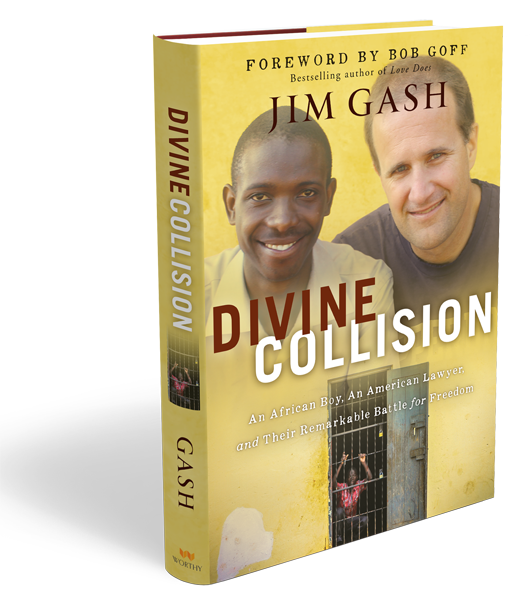
Several of you have kindly asked how things are going with Henry – the boy I met during my first visit to Uganda in a juvenile prison and with whom I am (hopefully) in the process of publishing a book.  After being released from prison in May of 2010, he completed eighteen months at Bob Goff’s Restore Leadership Academy in Gulu, where he finished second in his class and was voted as the student with the most “Outstanding Character.”  He then completed his last two years of secondary school at a leading science school – Uganda Martyrs Namugongo.

During the late summer of 2014, he was admitted into Kampala International University’s Biomedical Program.

KIU Logo

Despite its name, KIU is not located in the capital city of Kampala, but is instead six hours to the west in Ishaka.

Ishaka

Because Uganda is a former British Protectorate (independence in 1962), its educational system mirrors England’s.  Hence, Ugandan school kids complete thirteen years of post-kindergarten education before beginning university, the last two of which are called “A Levels” and focus on three primary subjects that lead into their undergraduate program of study.  Additionally, both law and medicine are actually undergraduate majors and allow the students to begin their careers earlier than their American counterparts – five years post-secondary graduation for law and six for medicine.

Henry decided when he was young that he wanted to be a doctor after observing the relative scarcity of doctors in Uganda.  Consequently, he focused on Physics, Chemistry, and Biology during his A Levels.  After scoring quite high on his national entry exam, he was admitted to KIU into their Biomedical Program, which began in September of 2014.  During his first semester, he and the other 400+ students provisionally admitted into the program were required to take (and pass) thirteen subjects in order to be officially declared Biomedical students:

Biology, Physics, Chemistry, Entrepreneurship, Behavioral Science, Ethics, Research Methods, Communication Skills, Epidemiology, Biostatistics, Computer Science, Mathematics, and First Aid.

After first semester grades were released last week, 35 were dismissed from the program for failing to make the grade.  Another 35 were also dismissed, but are allowed to repeat all thirteen subjects a second time to see if they can make the grade.  Yet another 102 have been provisionally advanced into the Biomedical program on the condition that they take additional supplementary courses.  The other 300 or so have been officially admitted.

I am pleased (and proud) to report that Henry was in the latter group – passing all thirteen subjects comfortably.  We couldn’t be happier.

This semester, he is taking Biochemistry, Physiology, Human Anatomy, Environmental Health, Nutritional Disorders, and Nursing Practices.  Please continue to pray that his studies are blessed.

We are still “patiently” waiting for the ruling in the appeal I argued on his behalf just over two years ago, and there have been no developments in the ongoing saga concerning his family’s land.

I am heading back to Uganda next week for ten days and really hope my schedule allows me to visit Henry at school.

Confessions of an Amateur Writer, Part IV

On each of my return trips to Uganda from 2012 through 2014, I brought with me new or revised chapters for Henry to read.  He filled in missing details and explained what he was thinking and feeling at critical junctures.  He was getting very excited about the prospect of the manuscript becoming a book.

Along my educational book-writing journey previously described in parts one, two, and three of this “Confessions of an Amateur Writer” series, I learned that perhaps the most important document a wannabe author writes is not the agent-seeking query letter, or even the manuscript itself.  Instead, the critical piece is the book proposal.

For established authors, this can often be dispensed with because publishers already know the author’s writing ability and platform.  But for amateurs, the book proposal is the only thing a potential publisher will ever read.  Once again, Amazon came through for me.

Nonfiction Proposal

As I was digesting this very helpful book, I was chatting with an old friend (Jenny Rough) from my Pepperdine/Kirkland days who’s since abandoned the practice of law in favor of writing.  Not only does she write all kinds of articles and pieces for a wide variety of audiences, but she’s in the middle of writing her own book.  And she has friends in the business.  One of those friends shared with her a copy of what her friend considered to be a truly outstanding book proposal.  Jenny graciously shared it with me.

Soon thereafter, I mimicked this exemplar and wrote my own book proposal, which had the following Table of Contents:

Overview and Outline ………………………………3

About the Author………………………………….…8

Target Audience and Competing Books ………..9

Marketing and Promotion …………………………14

Manuscript Specifications …………………………..22

Annotated Table of Contents ……………………..23

Sample Chapters

One ………………………………………….29

Two ………………………………………….30

Three ………………………………………..36

Eighteen …………………………………….47

I was pretty proud of myself when I was finished – it actually looked like a real book proposal written by a real writer.  While it is customary to include the first few chapters at the end of the book proposal, I decided to include chapter eighteen also, which was then the final chapter, so I could prove I had substantially completed the manuscript.

But the question Curtis Yates had previously asked continued to eat at me.  Why not wait until the elements of the story played out before trying to finish the book?  While Henry had been released from prison, and while I had argued his appeal before a Ugandan court, the ruling hadn’t been issued and Henry’s dream of attending medical school was still unfulfilled.  Additionally, the nationwide impact of Henry’s case and my subsequent engagement with the Ugandan judiciary was still in unfolding.

So while all of this was playing out, I continued to edit and supplement the manuscript.  This meant more three-day writing trips to Buffalo Bill’s Casino (my teenage son Joshua accompanied me once and greatly helped me figure out which of the legal portions were too technical), and more imposing on close friends.  One of my former students who served as a Nootbaar Fellow in Uganda for four months, Jeff Wyss, was particularly helpful and encouraging.  All of his comments and suggestions – even when I didn’t like them – were spot on.

Eventually, I gave the Yates firm the book proposal and the now-swollen manuscript.

Much better, but still not good enough.  Your manuscript is 129,000 words.  Anything over 100,000 in this genre will scare publishers away.  You really should aim for 60,000-75,000.  Just because it happened, doesn’t mean it should be in the book.  Have you considered hiring an editor?  And the book proposal looks way too much like a legal document.  Your chapter-by-chapter summaries need to be written like the book and need to tell the story.  Way too sterile.

While those weren’t their exact words, that’s exactly what they meant.  What I heard was, “Take half of your book and throw it in the trash.”  While it felt like an uppercut to the trachea, it wasn’t a knockout blow.  Instead, I took it on as a personal challenge – I felt like I was getting close and I didn’t want to admit failure by hiring a ghostwriter and pretending that I actually wrote the book myself.

I really tried to take to heart what he said – Just because it happened doesn’t mean it should be in the book.  Each time I read through the manuscript, I trimmed away a few thousand words.  After eight or nine times passes, I was down to 89,000.  I refused to cut anything else because I felt I would lose critical pieces if I did.  As I was editing, I also convinced the Yates firm to send me two successful book proposals in the memoir genre (the other sample proposal I had was in the reference book category).

These excellent proposals were structured a bit differently, but had all the same elements.  Once again, I patterned my proposal after these models and then re-submitted the entire package to the Yates firm.  This happened in the spring of 2014.

During the summer, I got the answer I was hoping for.  Almost.  The Yates firm liked the proposal, but the book was still too long and needed to be professionally edited before it was sent out.  They explained that the editor would not be a ghostwriter, but would instead help tighten and shorten the book.  With this clarification, I eagerly accepted their recommendation of Kris Bearss in Nashville.

During my first phone conversation with Kris, I learned she’d previously been an editor for two major book labels before becoming a free-lance writer and editor.  She was also in the process of editing a version of Bob Goff’s Love Does for a Young Adult audience, so she was familiar with some of the work I was doing in Uganda.

Small world.

Truth be told, I was very nervous about what Kris would try to do – I was highly protective of the manuscript in its current form.  I was quite skeptical that much could be done to shorten it without losing important story elements.

As usual, I was wrong.  Kris was phenomenal.  She sent me chunks at a time via Microsoft Word’s “track changes” function.  I would accept most of her changes and then push back on a few of them.  Sometimes she would push right back at me, but most of the time, she would find a way to let me keep what I wanted, but still make it better and shorter.  By the time we finished, the manuscript was 78,000 words and much better.

In November of 2014, the Yates firm officially said yes and sent me a contract.  I was now officially wannabe author with a real agent.  But I was still a wannabe author without a book contract.

In the next (and last) installment in this series, I will discuss my final meeting with the Yates firm before the book proposal was sent to publishers, and the typical terms of an agency and publishing contract.

Thanks, again, for reading.

Tribute to a Hero

Earlier today, Uganda laid to rest one of its true heroes – a prosecutor slain for doing her job.  At the memorial service, she was remembered as one who did her job “without fear or favour.”  Her life motto was “Live every day, love every day, love beyond words.”

Joan-Kagezi-in-court (1)

In his eulogy today, the Director of Public Prosecutions, Mike Chibita, mentioned the tributes to Joan that have poured in from around the world this week, including the one from Pepperdine.  Here is the text:

“Justice Chibita,

Our community was blessed just over a year ago to welcome Joan into the Pepperdine University family during her visit here in Malibu, California.  On behalf of that Pepperdine family, I would like to extend my deepest condolences to Joan’s loved ones, her dear and adoring colleagues at the Department of Public Prosecutions, and to the entire practicing bar and judiciary of Uganda.  As a result of this senseless act of cowardice, the world today has one less champion fighting for the cause of justice, and those of us who were privileged to know Joan have one less faithful friend.

While Joan’s earthly work in pursuit of truth of justice has reached its end, Joan now resides with the heavenly author of all truth and the dispenser of all justice.  Nothing would be a more fitting tribute to Joan’s life and legacy than for her work here on earth to be carried on with the same passion and integrity she so beautifully modeled for us all.

Those who carried out this evil deed, and those whom Joan was in the process of bringing to justice, must not prevail.  Just as Joan held her head high and refused to blink in the face of evil, so, too, will those who follow in her broad and deep footsteps.  Though the struggle between good and evil rages on, we know how the battle will ultimately end.  We know that good will prevail because we have a Savior who has gone before us and secured our victory.

Joan has fought the good fight, and she has run the race set out before her with perseverance and grace.  Though it is far too early, we know that Joan has achieved the prize.  The Creator of the universe is waiting to receive her, and He will greet her with these simple words: “Well done good and faithful servant.”

With overflowing hearts of sorrow and love,


Jim Gash

Global Justice Program Director

Pepperdine University School of Law

The Three Most Important Things

As a Pepperdine faculty member and former administrator, I often interview applicants for teaching and staff positions at the law school.  I start every single interview with the same simple, informal question: “What are the three most important things to you, and why?”

My hope is to casually catch the applicant in a moment of candor – before we get into pre-rehearsed canned responses about how much he or she wants the job.  I can think of no better way to cut through the smoke screen than to learn what the applicant truly values.  The applicant’s answer is unquestionably the most important aspect of the interview for me.

Because I ask this question so often, I have had the opportunity to reflect on this myself on numerous occasions.  My three:

My relationship with God

My relationship with God


My relationship with Joline

My relationship with Joline


My relationship with my kids

My relationship with my kids

Last month, I interviewed applicants for summer internships with Pepperdine’ Global Justice Program in Uganda, Rwanda, and India.  Once again, I started by asking the students to tell me the three most important things to them.  The answers were interesting, varied, and insightful.  They included: Jesus/God/faith, family, friends, relationships, significance, intellectual curiosity/knowledge, education, culture, independence, community/connectedness, reading, purpose, growth, loyalty, ending human trafficking, wholeness/well-being, justice, service, love, and pizza.

Yes, pizza.

While most students provided a single word or short-phrase responses before I pressed them on why they chose those answers, one stood out to me.  I actually got misty, though this happens to me way too often.

Her answer is a prayer I now pray for my children.

I desperately yearn for her words to penetrate my kids to the marrow – for this to be the one thing that remains when all else is stripped away.  I won’t care what the second, third, or thirtieth most important thing is to them if the first is the same as this student’s:

“The most important thing to me is the assurance that I am known and deeply loved by God.”

Yet another reason that I have the best job in the world – I learn way more from my students than they learn from me.

I will be praying that whoever reads this will intensely experience that same love from the Creator who desperately wants you to know how much He loves you.

Confessions of an Amateur Writer, Part III

In the summer of 2011, a Pepperdine public relations officer contacted Guideposts Magazine — a Christian version of Reader’s Digest – and got them interested in doing a story on the relationship between me and Henry.  A few weeks later, Rick Hamlin (Executive Editor) came out to Pepperdine from New Jersey to meet with me.  During lunch, he asked if I’d considered writing a book about my relationship with Henry and my experiences in Uganda.

As previously described in Confessions of an Amateur Writer, Part I, and Part II, I was in the process of doing just that and told Rick.  He kindly offered to read what I’d written thus far.  I was, of course, honored and shared with him what I had.

Over the course of the next year, he was more generous with his time and energy than I had any right to expect.  He made gentle suggestions and answered numerous questions along the way.  Like the literary agent I was pursuing, Curtis Yates, he explained what I was writing needed to read like a novel – “and that means dialogue, Jim, lots of dialogue.”

As a Torts professor, I teach students that anything a reporter places within quotes that knowingly fails to accurately reflect – word for word – what was actually said can potentially subject the reporter to a defamation claim.  I told Rick this and asked, “These conversations took place more than a year ago – how can I possibly write them as dialogue with any level of integrity?  And won’t that destroy my credibility with readers?”

Like so many others who graciously assisted me along the way, Rick was both patient and direct.  “I understand your concerns and you’ll have to decide for yourself how comfortable you are with how much dialogue you place in quotes.  But you won’t have readers to worry about if you don’t have a book.  And you won’t have a book if what you write is almost entirely narrative.  Just think of all other nonfiction books you’ve read – do you think all the dialogue in those books is word for word?”

All the other nonfiction books I’ve read.  That again.  I had just begun my initial foray into actually reading books, so I understood at least some of what he was saying.

He continued, “In fiction, writing dialogue isn’t a problem – the author is making up everything anyway.  But in nonfiction, readers understand that dialogue that took place in the past won’t necessarily be reflected ‘verbatim,’ but instead accurately captures to the best of the author’s recollection the substance and tone of what was said.”

This made perfect sense, and was quite liberating.

And as I delved deeply into reading nonfiction books, I saw exactly what he meant – Unbroken, Boys in the Boat, Wild, etc., are littered with dialogue that I, as the reader, accepted without questioning the integrity of the writer even though it’s clear there is no way the conversations are recorded exactly how they occurred years (or decades) before the book was written.

This epiphany freed me from the shackles of boring narration and empowered me to tell the story in a much more readable manner.  Converting dense block paragraphs into light and fast-paced dialogue cannot be described as “editing” without robbing that word of its meaning.  I essentially started over.

As I voraciously consumed most of the NYT bestseller list, I started noticing patterns and commonalities in the writing.  While each of the books generally moved along chronologically, none of them began with the earliest event reflected in the book. Instead, most started with an inciting event and then back-filled along the way with flashbacks and memories to provide context and depth.

Monkey see, monkey do.  I, the monkey, tried to give this a shot.  As I was discovering at nearly every turn in my amateur writing foray, this is much harder than good writers make it look.  As I was struggling with this, I had a conversation with a close and trusted friend at work (Dana Hinojosa) whose husband Jason is a real writer, and who knew I was trying to write a book.

“Jason struggles with this also.  All writers do.  But there are books about how to do it.  You should get one,” she suggested.

So I did.

Time in Memoir

While this book was quite good, what was most helpful was to re-read a book I recalled doing this well.

Wild

Serendipitously, another book I read at about this time, provided another excellent how-to guide for me.

Beautiful ruins

Distilled to its essence, this process is all about transitions.  Good writers create connections – images, words, thoughts, locations – that bridge the present with the past, or with what is currently happening on one continent to what happened in the past or in the future on another.

So what finally emerged when I weaved what I learned together is the opening sequence of my “manuscript” (I hesitate to call it a book until a real publisher does).  Here it is, in its current form:

CHAPTER ONE — THE CATALYST

“Is that really Africa, Dad?” Jessica asked.

My thoughts floated somewhere across the water stretching out before us as my family and I stood along the cliff’s edge.

“Dad? DAD? Are you even listening to me?” my inquisitive thirteen-year-old daughter persisted.

“What, sweetie?” I said, snapping back to the present.

“Is . . . that . . . Africa?” She was pointing at a smudge of brown on the horizon separating the water from the sky.

“Yes, it’s Morocco, and that’s the Strait of Gibraltar in front of it. We’re standing on the southernmost tip of Europe.”

“Are we going there?”

“No, sweetie. We’re going to drive around Spain for a while before heading to London for six months.”

My eight-year-old, Jennifer, took off her rainbow-rimmed sunglasses and sighed. “When can we get some ice cream?”

“I want some too,” my burr-headed middle child, Joshua, added.

“No, dad.” Jessica stood on her tiptoes until she and her furrowed brow were centered in my field of view. “I mean, are we ever going to Africa?”

“Nope. I have no plans to go to Africa. Ever.”

“Why not?”

All she got in reply was a shrug. I turned her shoulders around to face the horizon and placed her head under my chin. What would we ever do in Africa?

“Hey Jim, let me get a photo,” my wife Joline said as she lined us up against the rail and we squeezed together to fit in the frame of the picture. This was the only memory of Africa I expected our family ever to share.

Gibraltar

Jim, Jennifer, Joshua, and Jessica – Europa Point, June 2008

Had Joline’s camera lens been able to focus over my shoulder on a small village 3,358 miles south of Gibraltar, it would have captured a deceptively innocuous scene – a dusty peasant farmer hiring an itinerant herdsman to tend his nine cows.”

With this transition, the story moves to Uganda and into the inciting event in Henry’s life that set us on a collision course – the mob killing of a herdsman that led to his initial arrest.

I had finally figured out how and where the story would begin.  I had no idea, however, it would be just as difficult to decide how and where the story should end.

In the next installment in this Confessions of an Amateur Writer series, I will describe what a Book Proposal is, how critical it is in the publishing process, and how I learned the hard way how to write one.  I will also discuss how I decided what the last chapter would be.

Thanks for reading.

Confessions of an Amateur Writer, Part II

In the wake of my ignorant faux pas with the literary agent I really wanted — described at the end of Confessions of an Amateur Writer, Part I — I sent a draft of my first seven chapters to some dear friends in Dallas – Amy and Colin Batchelor.  They were on the list of those to whom I’d been e-mailing daily updates about the unfolding events in Uganda, and Amy was a frequent commenter and encourager on the updates.  She was also among the first to suggest that I turn my experiences into a book.  So while I was visiting them in Dallas, I took a risk and asked Amy to read what I’d written.

Her first reaction: “This reminds me of ‘Same Kind of Different as Me.’”

Same Kind of Different

As often happens, my blank stare betrayed my ignorance.  “Um, what?” I asked.

You haven’t read “Same Kind of Different as Me?”

“Um, no.  Is that a book?”  I decided then wasn’t the time to burden her with the knowledge that I didn’t actually read books, other than the text books from which I taught Torts and Evidence at Pepperdine Law.  My astounding (and embarrassing) lack of literary engagement is yet another reason I had no business trying to write a book at that time.

Amy explained that I had unwittingly structured my book the same way as “Same Kind of Different as Me” – dual first-person narratives told from the perspective of two very different people unlikely to ever meet.  So the next day, I bought it and read it on the plane home.  It is brilliant.

Soon thereafter, one of my former students Chris DeRose got a book deal to publish a historical/political analysis of an important election early in our nation’s history.

Founding Rivals

Chris was generous with his time and liberal with his patience as I peppered him with questions about the process of getting a book deal.  He was even kind enough to connect me with his agent who, in turn, graciously agreed to read a couple chapters of what I’d written and talk with me on the phone afterward.

That conversation with Chris’s agent was equal parts enlightening and humiliating.  His first question was, “What’s the book about?”

This momentarily knocked me off balance.  I thought he’d read what I sent him. My pause before answering clued him into my cluelessness.

“I know the book is about you and a boy you met in prison and what happened thereafter, but what is the book about?  What is the theme?  What is the point?  What do you want the reader to learn?” he inquired.

To call me perplexed as to how to answer his question is way too charitable to me.  I initially mumbled something about “God” and “love,” but ultimately confessed that I hadn’t really thought about it.

“OK . . .” he said.  “Well, who’s the antagonist in this story?”

“Antagonist?” I asked, trying to stall while I desperately searched my tenth grade English memory banks.

“Yes – the villain.  Who’s the bad guy that creates the conflict and drives the action?”

“Um.  I guess I would say . . . injustice is the villain?”

My closed-eye swing missed the pitch by at least three feet.

“Listen,” he said, “there’s a process to storytelling that audiences expect that’s more complex than people think.”  In his sentence, “people” played the role of gentle euphemism for “wannabe morons like you.”

“I recommend, Jim, you read a couple books about storytelling as you continue with your project.  You have a good story, but investing some time in learning how to tell your story will be quite helpful.  I’d start with ‘Save the Cat’ and ‘Story.’”

Save the Cat

Story

Before we hung up, he gave me the “It’s not you, it’s me” line about why he wouldn’t be able to take me on as a client.  It felt like a foot to the groin.

For a few weeks, I seriously contemplated giving up.  But once again, Amazon kindly placed on my doorstep a couple more tools wannabe morons like me needed if I had a prayer of getting a publisher, much less an agent, interested in what I was writing.

I started with Save the Cat because, well, it was shorter.  I read it – twice.  I laughed out loud every few pages – not because the author was funny (though he was) – but because the concepts he talked about were so simple and so blatantly absent from my story.  For example, one chapter explains that every character in your story needs a limp or an eyepatch – something (other than just a name) to allow the reader to recall which character you are referring to.  Don’t expect the reader to be able to keep everyone straight without visual cues to trigger memories.  (Incidentally, the Save the Cat title derives from the notion that if you want your main character to be liked by your audience, that character needs to do something admirable (like saving a cat) near the beginning of the story).

I next tackled the other book – Story.  It’s much more complex, but it pounded home the elements of a story that need to be present (in almost all cases) in order to meet the reader’s expectations.  Anyone contemplating writing a book or screenplay (both books are actually targeted at screenplay writing) should read at least one of these books, if not both.

That next summer, I was back at the Yates & Yates firm.  I had sent another draft, and Curtis was kind enough to meet with me.

We started off talking about where things were in Henry’s life and mine.  “You’re moving to Uganda in a few months, right?  And Henry’s appeal still hasn’t been argued, right?  What’s your hurry with finishing the book – why not let the events play out before trying to get it published?”

He, of course, had a point.  But I was still laboring under the misconception that writing a book shouldn’t be that difficult or take that long.

With respect to the content of the book, he was quite encouraging about how the underlying events would make a good story, but he was equally clear about the quality of my writing.  “You write like a lawyer,” he said.  And this wasn’t a compliment.  “I’m a lawyer, so I’m not saying this is a bad thing, but storytelling requires a different kind of writing.  You’ve written a report – it needs to be a story; your book is an architectural drawing – it needs to be a painting.  What you are writing is a memoir, and that needs to be as good as a novel in order to get published.”

I tried to sound out memoir (mem-wahr) and tried to figure out what it was.  It sounded like armoire, but I was pretty sure he wasn’t talking about furniture.

Mercifully, he explained that a memoir is a literary genre that involves a first-person, non-fiction narrative about an important part of (memory in) the author’s life.

“Have you read many memoirs, or novels, for that matter?”

Cricket, cricket.

“Well, I recommend you take a few months and read as much as you can so you can get a better idea of what publishers are looking for.”

So I did.  In fact, over the next three years, I read close to half of the books that made the NYT Bestsellers list – both fiction and nonfiction.  (At this point, my kids would correct me, so I’ll admit that I only read a few – more accurately, I listened to audiobooks for more than a hundred bestsellers).

Some of my favorites are:

All the Light

Beautiful ruins

Boys in the boat

Kisses from Katie

Unbroken

Wild

And all things Harlan Coben (I read at least a dozen).

Harlan Coben

To say this experience was a bit eye-opening is like saying the Sahara is a bit sandy.

In the next installment of this Confessions of an Amateur Writer series, I’ll discuss how the editor of Guideposts Magazine helped me overcome my biggest struggle in applying what I learned from reading the hundred-plus bestsellers – how to handle writing dialogue that occurred years earlier — and then I’ll describe how I finally got to the point where Yates & Yates took me on as a client.

Thanks for reading.

Confessions of an Amateur Writer, Part I

Five years ago this week, I checked into Buffalo Bill’s Hotel and Casino on the border of California and Nevada.

buffalo-bills-casino (1)

I was going to write a book – or at least a big chunk of one.  Two months earlier, my life had changed during a January, 2010 two-week visit to Uganda – my first foray into anything that could be remotely called a “Mission Trip” in my first forty-two years of life.

While in Uganda, I spent a week working in a juvenile prison in Masindi with four other American lawyers and an American non-profit worker.  What happened that week was later dubbed “The Masindi Project.”

It was, perhaps, more appropriately referred to by my oldest daughter Jessica as “Dad’s mid-life crisis.”  While there, I struck up a highly unlikely friendship with a sixteen-year-old Ugandan prisoner named Henry and we became lifelong friends.

Jim, Henry, and Joseph on Henry's Mat

During these two weeks, I sent daily e-mail updates to family and friends about what we were experiencing.  I found the process of capturing feelings and experiences and distilling them into written form to be equal parts challenging and gratifying.  After we returned home, I talked to Henry every few days as the juvenile cases we prepared for trial were taken to court.  Kids were being released almost daily, so I continued sending regular e-mail updates to the growing list of those eager to hear what was happening. Some of the recipients encouraged me to write a book about my experiences.  I laughed.

Soon thereafter, I read Donald Miller’s book, A Million Miles in a Thousand Years.

A million miles

In Chapter One, Don writes about Bob Goff: “I have this friend Bob who writes down everything he remembers . . . He’s the only guy I know who remembers his life.  He said he captures memories, because if he forgets them, it’s as though they didn’t happen; it’s as though he hadn’t lived the parts he doesn’t remember.”

After reading that, I had a strong conviction that I didn’t want to forget the memories I made in Uganda – I lived those moments (deeply and intensely) and I didn’t want them to disappear.  That’s how I found myself (taking the advice of some friends and family) as an amateur writer locked in a cheap hotel with my laptop, an ice chest full of diet coke, and a card table I brought with me (it is a really cheap hotel).  I wanted to make sure I never forgot what happened in Uganda.

That’s when I learned a lesson that real writers already know – the first page is the hardest to write.  Where does the story begin?  Using my mammoth reasoning skills, I concluded it should start at the beginning.  But where did this story begin?  Was it when we arrived in Uganda?  Was it when we decided to go?  Or did it begin before we decided to go – at all the times I had previously decided not to go anywhere outside my comfort zone?  I knew that Henry’s story was entwined with mine, so was the beginning when he was arrested?  But the story of how and why he was arrested itself started sooner – much sooner.

From reading Don Miller’s book, I knew the story needed to have an arc – an inciting incident resulting in crisis with rising and falling action, ultimately culminating in a resolution where the main characters experience change.

story-arc

So I mapped things out along these lines.  Henry’s inciting incident would be his wrongful arrest, which led to his harrowing two years of imprisonment, culminating in his release from prison with the assistance of our team.  My inciting incident was Bob Goff’s conference speech entitled “Love Does” (later a best-selling book) that caused me to cede a bit of control of my life and go on this one-time trip where I met and helped Henry and some other juvenile prisoners get home to their families, and in the process grew spiritually.

If I could only get started, I reasoned, then I could pound this puppy out over the course of a few months, at most.  I was accustomed to writing lengthy and complex legal briefs and law review articles, so I should be able to do this.

Foolishness.  Utter foolishness.  Though I was entirely oblivious to this at the time.

As I often did with legal writing, I decided not to get bogged down at the beginning – I just started writing about what happened – I would organize these into chapters later.

Over the course of those three days, I got about fifty pages written – less than I hoped, but about what I realistically expected.  I would finish the spring semester of teaching two months later, then spent June finishing the book.  I was pleased with my plans.

But by April, my plans were obliterated.  My neat little story arc for Henry shattered.  While he was acquitted in the original murder charge that landed him in juvenile prison, he was convicted on a second charge associated with the tragic death of another prisoner who died shortly after a failed escape attempt.  Henry wasn’t going home.  Instead, he was very likely facing an extended prison sentence.  And my story arc collapsed just as hard – I found myself back on a plane headed for Uganda to be with Henry and questioning where God was in all of this.  So much for neat and tidy.

Fortunately, things got back on track again in May.  After lots of prayer and legal wrangling, Henry was released on probation and resumed school.  So I resumed writing.

I also began researching how the book publishing process worked.  I bought a book off Amazon and started reading.

Essential Guide

I learned that the first step in getting a book deal was securing an agent.  Makes sense.  And the way to get an agent, I learned, was through what’s called a “query letter.”  This one-page letter describes the book, the audience, the author, and the author’s platform.  But I didn’t just want an agent.  I wanted a specific agent, and none other would do.

From the beginning, I had my eye set on the Yates & Yates literary agency.  Sealy Yates and his two sons Curtis and Matt are all Pepperdine Law grads, and Sealy was on Pepperdine’s Board of Visitors.  I knew they represented lots of high profile writers and that they were stellar at what they did.  Serendipitously, I found out that Sealy and Matt would also be attending the inauguration of Ken Starr as Baylor’s President in September of 2010, so I decided to skip the query letter phase and directly approach them about representing me.  By that time, I had finished the first seven of what I believed would be fifteen chapters.

During a pre-inauguration lunch with a bunch of Pepperdine folks, I sat next to Matt and slyly broached the subject.  He was kind and agreed to take a look at what I had, but was also honest with me about the fact that Yates & Yates worked almost exclusively with “established” authors.  The subtext should have been clear — amateurs need not apply.  Later that day, I handed him the first seven chapters.

Looking back now, I cringe at my audacity and laugh when I think about what was going through his head.

As expected, this plan crashed and burned.  I’ve been too embarrassed to ask Matt if he ever read what I gave him, but I sincerely hope he placed it on the six-story-high pile of unsolicited manuscripts from wannabe writers he gets each year.

Mercifully, Matt didn’t follow up with a rejection letter.  If he had, I probably would have quit right then.

In my next post, I will discuss how and where I learned just how little I knew about storytelling and where I found some very helpful answers.

The Ebola Formula

Perhaps the study of law has something to add to the study of medicine, at least in one context.  A few weeks ago, I was talking with my brother and sister-in-law about their decision to invest a sizable chunk o’ change on their boys learning to “swim” when they were about eight months old.  These lessons are designed to ensure that if the boy falls into a pool, even fully clothed, he can quickly roll onto his back and float and cry until rescued.  The iterative training takes place over a several-week period and scares the hell out of the kid at the beginning. It is done under very strict conditions and almost always results in the kid learning how to stay alive for several critical minutes should the unthinkable happen.

So my sister-in-law is telling me about a conversation she had with one of her friends who criticized her for putting her sons through this training because of the “trauma” and the little bit of water the kids occasionally ingest during the training that some sometimes hurts their “wittle tummies.”  Her friend vowed never to subject her children to such cruelty.

“The BPL on that one is easy,” I said.  “No question that you were right and your friend was wrong.”

“BPL?” she quite reasonably asked.

“Why yes, BPL,” I responded.  “It is life’s most important formula.  It works for swimming training just as well as it works for Ebola.”  Knowing I was being coy – I like to yank her chain from time to time – I finally explained:

This is a simple formula I teach my students in Torts as they learn to analyze whether an individual acted negligently in any given situation.  P equals the probability of harm and L equals the gravity of harm risked by the conduct in question. (No one really knows why L was chosen instead of G for this formula – probably something to do with Latin).  When multiplied together, they give you the magnitude of risk posed by a given activity.  B equals the burden of avoiding the risk.  If B is less than P multiplied by L (B<PL), then the rational (reasonable) decision is to engage in the activity.

To illustrate, look at the choice faced in deciding whether to get the swimming lessons.  The first task is to define the activity to be evaluated – Should the parents give their kids these swimming lessons?  Set P as the probability of the kid falling into a body of water when momentarily unsupervised, and L as the gravity of harm if this happens.  The probability of the kid falling into water is pretty low – say 1/100 of 1%.  But the gravity of harm that would be suffered is quite high – death or serious injury.  So while the probability of harm is low, the gravity is astronomical.  The burden to be evaluated is the activity necessary to avoid the risk — the fleeting fear and tummy trouble junior suffers, plus the cost (financial, emotional, and inconvenience) associated with the lessons.

When measured against the relatively minor burden of putting junior through the lessons and paying the cost, the results should be clear for most people: B<PL.  In other words, the magnitude of the risk outweighs the burden associated with avoiding it.  Accordingly, the rational decision would be to give the kid the lessons.

Whether we acknowledge it or not, we make BPL decisions during most moments we are awake.  We are constantly weighing costs and benefits in what we eat, what we buy, what time we go to bed, etc.

The recent measles outbreak has sparked a debate that will only increase in volume and intensity over the next few years as such outbreaks increase in size and scope. Why?  Because too many parents reached different BPL decisions than others.  The way to keep diseases such as measles at bay is to inoculate the entire herd – that way no one gets it or spreads it.  But several years ago, many parents looked around and decided that since all the other kids in the herd were getting inoculated, then they didn’t need to inoculate their kids.  After all, if the other kids in the herd don’t catch measles because they are inoculated, then their kids can’t catch it even though they aren’t inoculated because the disease isn’t in the herd.

Here is the BPL equation by the parents.  First, identify the question being evaluated – Should I get junior vaccinated against the measles?  The probability of getting measles is really low because the entire herd is getting inoculated (and has been for years) so there will be no one to infect their kids with measles.  And while the gravity of harm associated with measles is potentially somewhat severe, it isn’t life-threating for most of those infected.  Thus, the magnitude of risk associated with contracting measles (probability multiplied by gravity) is relatively low, or so the parents believed.  On the other side of the equation is the burden encountered to avoid the risk – getting the inoculation.  Most parents considered this to be very low – getting junior jabbed with a needle just after his first birthday is little more than an afterthought.  The kid cries for thirty seconds, but the kid cries every hour or two anyway – no big deal.  So most parents had their kids vaccinated because the minor burden is less than the moderate risk – B<PL.

But we are now finding out that the “sophisticated” parents (usually wealthy & highly educated) saw the equation a bit differently.  Like most parents, they concluded that since the other parents were vaccinating their kids, the probability of junior getting measles was very low because there would be no other kids with measles to spread the disease.  Thus, they reasoned, the magnitude of risk (PL) approached zero.  But, and this is critical, these parents read or heard about a study that suggested autism and other similar conditions might be traced to these vaccinations, so the burden of avoiding the risk (B) was actually higher than the momentary hissy fit junior would pitch after getting jabbed.  So much higher, they reasoned, that now the burden outweighed the risk (B>PL), so they found it rational not to inoculate junior.  (Incidentally, the study these parents relied upon was quite heavily criticized and controverted when it was issued, and later thoroughly discredited, withdrawn, and labeled as “an elaborate fraud”).

As a direct consequence, we get a measles outbreak, at the happiest place on earth (Disneyland), no less.  Why?  Because the parents many call “savvy” or “clever” (others call “selfish”) were larger in number than the “savvy” parents supposed when they made the decision – it turns out quite a few other members of the herd weren’t inoculated either.  So when one of them contracted measles, it spread quickly throughout the herd.  In fact, the vaccination rate in some wealthy areas of Southern California is now as low as impoverished and war-torn South Sudan.  I suspect this will change, however, in the wake of this outbreak because most people act rationally, and when armed with the actual (rather than supposed) information that informs a BPL analysis, they will make more rational choices.

This highlights an important point – a correct BPL analysis requires accurate data points.  It is simply an empirical question.  Which brings me to Ebola.

The same formula must be applied to the ongoing, though thankfully diminishing, discussion about how to handle people coming from locations where they were potentially exposed to Ebola.  It was as disappointing as it was unsurprising that the majority of Republican politicians accused the Obama Administration of playing politics with Ebola, while the majority of Democrat politicians were accusing Republicans of doing the same thing.  One side argued that anyone coming from an infected region should be quarantined for twenty-one days, while the other argued that doing so amounted to unnecessary scare tactics and would hamper the work on the ground in Africa because fewer people would be willing to go and help stop the spread of the disease at its source if they were thereafter quarantined.

So here is the question – Should we quarantine people, even if they don’t currently have a fever (and are thus potentially contagious), for twenty-one days after they return from an infected area?  At bottom, this isn’t a political question, but an empirical one.  The only rational approach to this conundrum is to apply the BPL formula.

Is the probability of harm (virus spreading in the United States) multiplied by the gravity of this harm (mass death and suffering) outweighed by the burden encountered by holding people in quarantine for twenty-one days?  In order to answer that question, one needs to assign values to the variables.  We can all agree that gravity of harm is quite high if Ebola were to break out in the United States.  Thus, L is HUGE.

The more important question is what is the probability of the virus spreading associated with allowing one who has come into contact with those infected by the virus, but isn’t currently running a fever, to roam freely in his or her community?  Relatedly, how big is the burden of confining those who have been exposed until we are confident that person isn’t a threat to the community?  This, of course, includes the financial and personal burdens placed upon those paying for the confinement and on those who have to be confined.  It also includes the deterrent effect that such confinement would have on medical professionals who might be willing to go to Sierra Leone, etc., for four to eight weeks if they could go straight home (assuming they had no fever), but wouldn’t go at all if they had to be confined for three weeks thereafter.

This question was brought into sharp relief when nurse Kaci Hickox resisted being quarantined after returning from West Africa.  She received roughly equal parts praise for asserting her “civil rights” and scorn for “selfishly putting others at potential risk.”  But who was right?

Once again, this should be an empirical and scientific question, and not a political one.  While I am not at all an expert on Ebola, I can read.  Experts tell us that for those infected, on average, there is a sudden onset of flu-like symptoms 12.7 days after exposure.  But it is also apparently true that for 4.1 percent of patients, their symptoms will emerge more than 21 days after exposure.  And according to the New England Journal of medicine, approximately 13 percent of those infected never ran a fever.  So how does this affect the application of the BPL formula?

As noted above, the gravity of harm is quite high if Ebola were to spread in the United States.  But what is the probability of it spreading if we don’t quarantine for 21 days those who come back from an infected region?  It is probably fairly low, but far from non-existent.  In order to virtually eliminate the risk, it appears that they would need to be quarantined for something like 30 days because 1 in 25 won’t show symptoms (and thus be presumptively contagious) until after the initial 21-day period.  Likewise, the solution can’t be simply to quarantine those running a fever because 1 in 8 apparently won’t even run a fever when they are contagious.

And how big is the burden that would be encountered by quarantining for 21 days (or 30) all who go to West Africa to assist in containing the outbreak?  The financial cost is not significant, at least when weighed against the risks.  But the deterrent effect is likely quite significant – convincing a doctor or nurse to spend a month or three in West Africa is pretty tough.  Adding another month in relative isolation after the return raises the burden even higher.

So what is the solution?  It is simple – put some really smart and informed (and apolitical) scientists/doctors/nurses in a room and have them apply the BPL formula.  Whatever they decide, we accept.

Just one guy’s opinion, but remember that all of life is a BPL.